TL;DR

Three campaigns. Three completely different budgets and industries. But one shared instinct: when the obvious channel isn’t working, stop optimizing it and go somewhere else entirely.

  • A hospitality SaaS company skipped digital outreach altogether and ran 12 in-person Bar Camps in 12 European cities in 3 weeks, hosted inside the very hotels that were already customers.
  • A boutique digital agency stopped chasing decision-makers online and instead showed up at their trade-show booths, delivering a live, ad-hoc website audit on the spot
  • A forecasting-software startup, facing a Christmas mailing nobody could plan around during COVID, replaced perishable holiday cake with branded fortune cookies that stayed relevant – and un-thrown-away – for months.

Clients

- B2B SaaS (Hospitality)
- B2B SaaS (Finance)
- Digital Agency (Enterprise)

Year

2017 – 2024

Scope

Research
Interviews
Editorial
Layout & Design
Print
Distribution

See Cases Below

Tech Used

Pen
Paper
Adobe InDesign
Adobe Photoshop
Canva

None of these were the “safe” choice. All three worked because they matched the format to the audience’s actual behavior, instead of defaulting to whatever channel marketing usually reaches for.

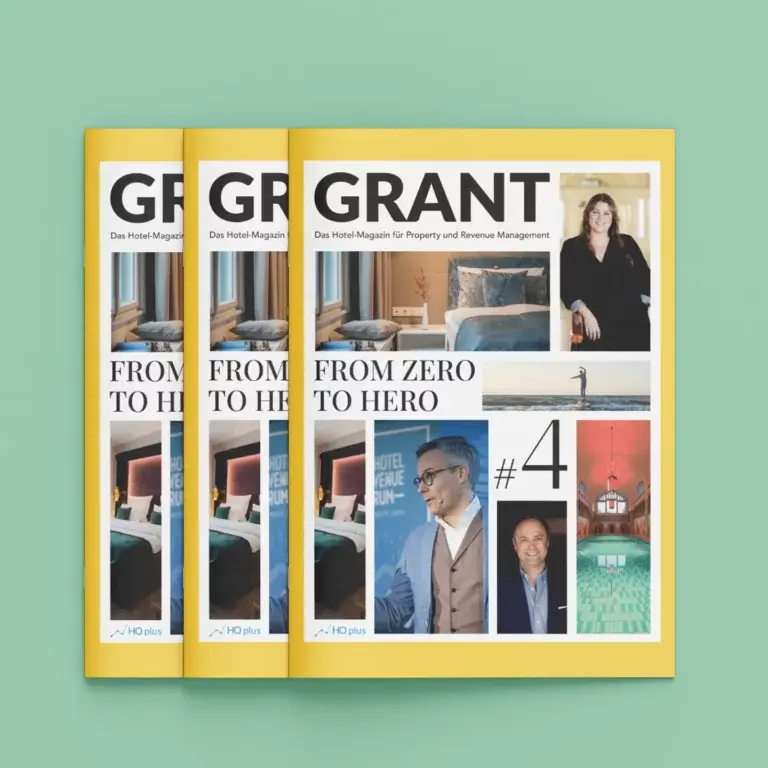
Client: SaaS / Hotel Revenue Management

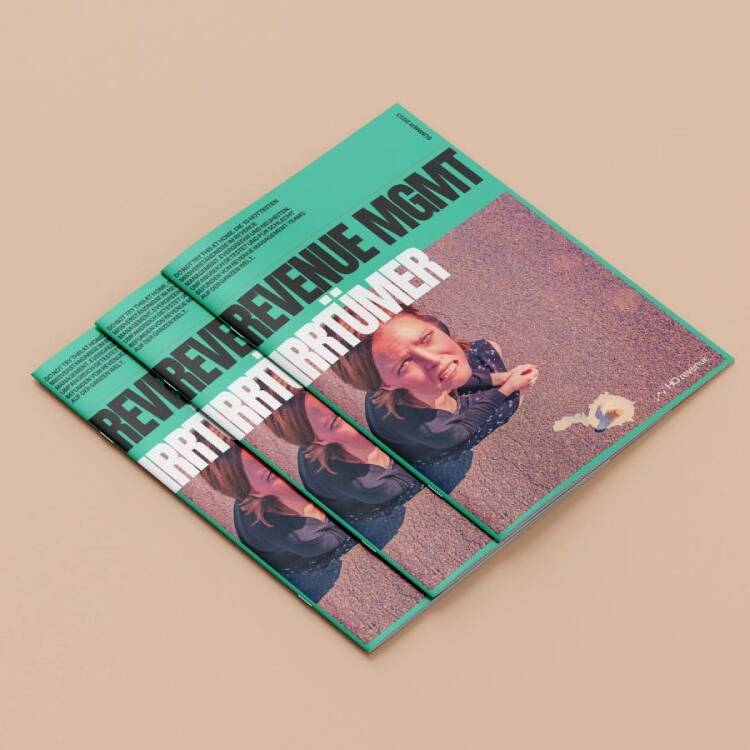
Case 1: Twelve Bar Camps, Twelve Cities, Three Weeks

Hoteliers and revenue managers are a notoriously hard audience to reach digitally – unless you’re offering something they genuinely can’t resist: a chance to benchmark themselves against their peers. That single insight became the entire campaign.

Rather than pushing another round of email and content marketing at an audience that mostly ignored it, the sales team built a live event series – Bar Camps hosted in the exclusive hotels that were already customers, doubling as both venue and testimonial. Partner companies were briefed tightly (a two-slide pitch, no more) to keep the format sharp, while a personalized email and landing-page sequence – built directly on live data pulled from the company’s own data cloud – gave prospects a preview of exactly how relevant the event would be to them before they ever registered.

Twelve cities across Europe, from Barcelona to Stockholm to Vienna, hosted the series inside three weeks, run by a single project lead working closely with regional sales reps.

The result: strong turnout in 11 of 12 locations, roughly 400 pre-qualified guests attending across the series (about half already existing customers), and more than 40 upgrades plus a comparable number of new customers within three months of wrap-up. Most events reached break-even the same evening.

Client: Pinuts digital thinking – boutique digital agency for complex enterprise IT infrastructure

Case 2: Selling at the One Channel Competitors Ignored

Pinuts’ target audience – decision-makers at industrial groups, SMEs, and public authorities – was nearly unreachable through the usual channels. Cold outreach and digital ads weren’t landing, largely because the agency’s offering (marketing automation, IT infrastructure, and website projects in a complex, high-ticket enterprise segment) is hard to pitch briefly, and this audience rarely has the patience for a generic sales conversation.

So the team flipped the question “where are our leads?” into something almost literal – and the answer turned out to be: at trade shows, standing at their own company’s booth.

Armed with a lightweight framework distilled from an earlier industry benchmark study – evaluating company websites on UX, accessibility, information architecture, and a handful of other factors – the team approached decision-makers directly at their booths, offered to run a 15-minute live audit of their own website, and delivered the findings as a short, on-the-spot presentation, handed over on a USB stick along with a printed whitepaper.

The result: roughly 15 solid leads per trade-show day, several of which converted into real client relationships, at a customer acquisition cost low enough to be almost embarrassing. The whole operation ran on a team of three-and-a-half people: one with the expertise and the idea, one skilled at getting a skeptical executive to actually sit down for coffee, and one who could turn raw findings into a polished presentation in real time.

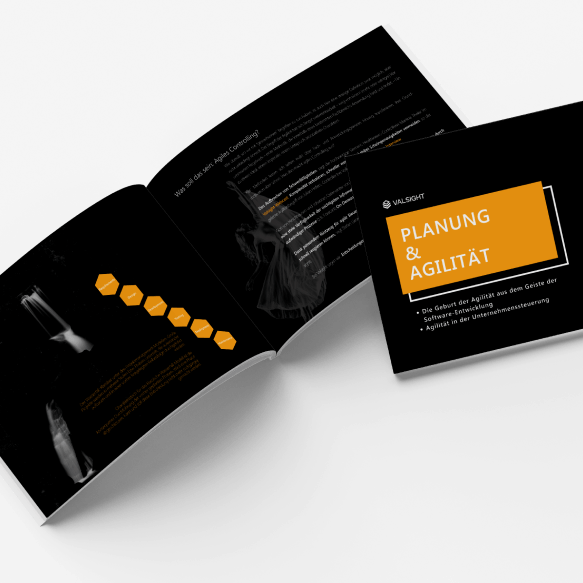
Valsight – SaaS startup, corporate forecasting & financial scenario simulation

Case 3: Christmas Gift That Refused to Go Stale

Christmas 2021 was an awkward moment for holiday mailings generally: most recipients were working from home indefinitely, meaning the usual seasonal cake would likely sit unclaimed in an empty office until it went stale. For a company whose entire product promises a reliable look into the future, sending a gift built on an uncertain delivery timeline carried a certain irony that was hard to ignore.

Instead of fighting that irony, this campaign leaned into it. Perishable holiday cake was replaced with branded fortune cookies – filled with self-aware, slightly cheeky “predictions” written by the whole internal team, timed to also land near Lunar New Year, another date already marked on every controller’s calendar.

The result: the format’s built-in durability turned into an asset. Cookies sat in half-empty offices for weeks or months, and every time one was finally discovered, it prompted a fresh round of social posts and thank-you notes from customers – stretching a single mailing into a running conversation that lasted until nearly Easter. As a side effect, having the whole team contribute fortune-cookie lines became a small but genuine team-building exercise in itself.

The Common Thread

None of these campaigns started with "which channel should we use" – they started with "where does this specific audience actually pay attention?"

Sometimes that meant going fully offline, sometimes it meant showing up uninvited at someone else's event, and sometimes it just meant picking a gift format nobody could quietly throw in the bin.

The common move was refusing to default to the channel that was easiest to plan – and choosing the one that actually fit the audience instead.
TAGLINE

Next Item

CEO Positioning

Privacy Preference Center